
Maintaining The Row Leather, Suede and Raffia Bags in Good Order
Buy one of these bags and you quickly notice what is missing. No logo plaque needs protecting, no coated canvas to wipe down, no weight of hardware absorbing the knocks. What you have instead is a lot of exposed surface: calfskin wearing its grain openly, lambskin linings, suede that takes a mark from a glance, and in summer a raffia weave with nothing sealing it. Almost all of the care burden of The Row bags belongs to the material itself. Simple to look after, unforgiving when you get it wrong.
The guide below is arranged by material, because that is how the decisions really divide. A grained calfskin tote and a suede top handle from the same season need opposite treatment, and a sisal bag wants something different again.
Before anything else: a caveat about care instructions
No public care protocol exists for these bags, since The Row issues none. No manual, no published cleaning chart, no brand-approved product line accompanies them. Everything below is therefore material-appropriate general guidance, drawn from how calfskin, lambskin, suede, canvas and raffia behave rather than from instructions issued by the label. A good leather specialist would be cautious, conservative and biased toward doing less, which is the right posture here. No definitive brand-issued cleaning routine exists for these bags, so ysl clutch purse anyone presenting one is filling a gap rather than quoting a source. Ask a professional before applying anything at all to a piece you care about.
What you do matters more than what you buy
Most of what ruins a good bag is routine handling, and the remedies are behavioural rather than chemical. Overfilling distorts a soft silhouette faster than anything else, and owners make it most often with the Margaux and the Park Tote. The belted side gussets on the Soft Margaux adjust the shape, and are not a licence to force more in. Leather dries and fades in sunlight, and faster still on a radiator or a car dashboard. Rain does more harm than people assume on unfinished surfaces, and suede and raffia have almost no defence against it. No product on a shelf covers as much ground as simply keeping a bag away from sun, heat and water.
- Empty the bag before storing it, including receipts and anything that can transfer colour.
- Leave a soft bag hanging by its handles and the drop stretches, so keep it off the hook.
- Put pens, keys and cosmetics in a pouch rather than letting them sit loose against the lining.
- Handle pale calfskin and untreated suede only with washed hands.
Smooth, grained, saddle and polished calfskin
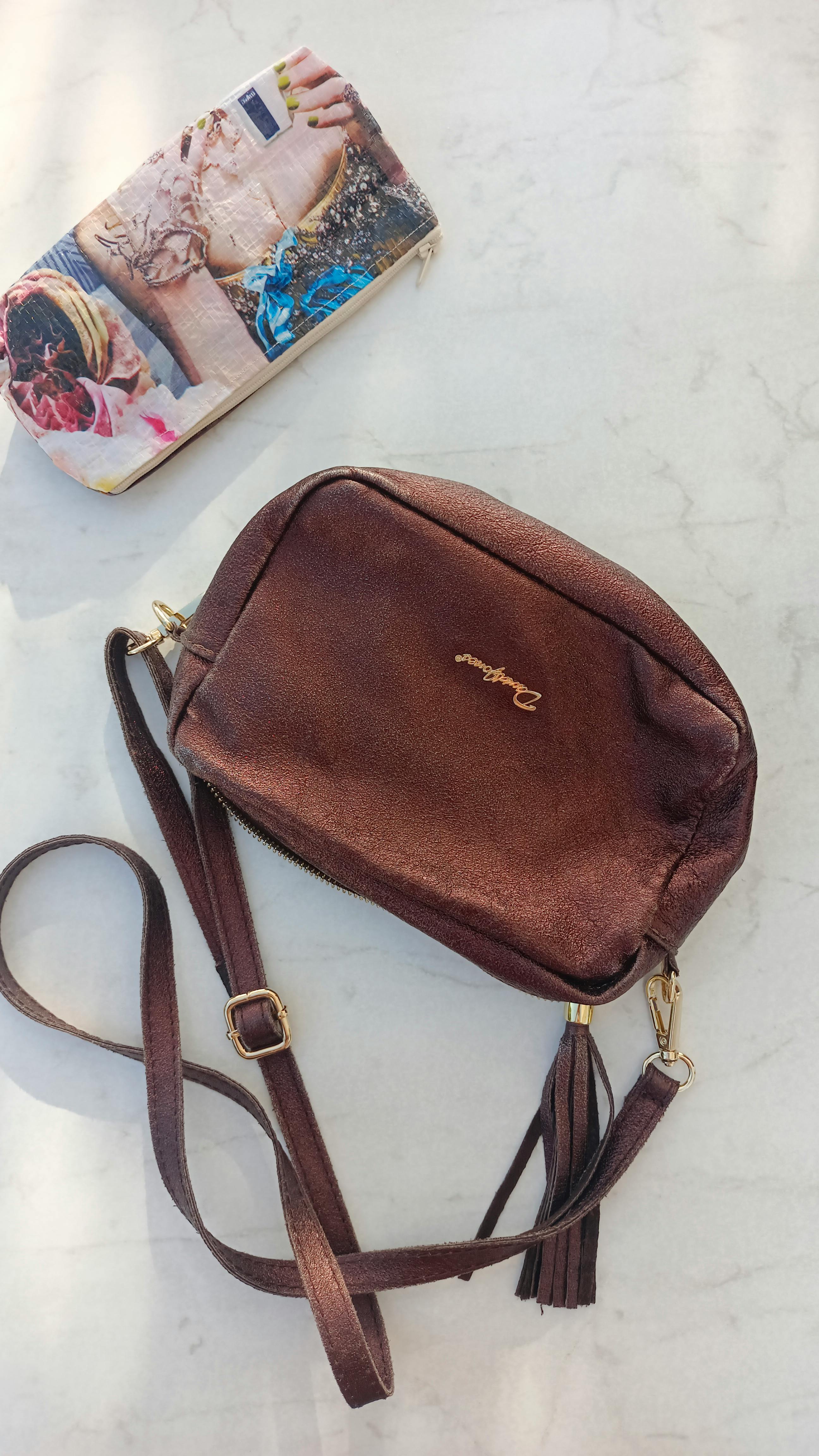
The backbone of the line, calfskin, is also the most forgiving material in it. Smooth calfskin shows scuffs and shine, matte grained calfskin conceals them well, and polished saddle leather falls between the two. Routine care stops at a soft dry cloth after use, used with the grain and concentrated on the corners and base where dirt collects. Neutral conditioner is fine sparingly and infrequently, and both words matter, tested first on a hidden panel. Darkening, tackiness and lost structure are what over-conditioning buys you. Pale calfskin will also take dye from dark denim, so keep light bags away from indigo, and never scrub a transferred mark, because scrubbing only spreads it.
Inside jobs: nappa and lambskin
Because they appear more often as linings than exteriors, the approach to protecting them changes. On the Margaux Shoulder the lining is lambskin, and the Bourse Clutch pairs a calfskin exterior with a nappa lining — so the softest material in the bag is the one your keys sit against. Both are exceptionally soft, both mark easily, and neither responds to being worked on. Use a dry soft cloth, lightly and rarely. Leave conditioner out of it completely, because the hides are already supple, and over-treatment leaves a greasy sheen that never comes out. The real protection is a pouch inside the bag rather than a product applied to it.
Suede, the most demanding material in the line
At this label suede is consistently dearer, and it demands a matching increase in care. The observed 2026 market prices make the gap plain: India 10.00 runs $3,850 in leather and $5,370 in suede, and Agnes 15 runs $5,000 in leather against $5,800 in suede. For the premium you get a nap that flattens, soaks up and stains faster than any finished hide. Caring for suede is mechanical, not chemical, which is the thing most owners miss. Used gently and in one direction, a dedicated suede brush lifts the nap and takes off surface dust, and which alone handles most routine wear. Anything wetter than that belongs to a professional.
- A light brush along the nap after each wear, not a scrub across it.
- Dry a wet bag naturally at room temperature, clear of radiators and hairdryers, and brush only when it is fully dry.
- A suede eraser lifts dry marks, used with as little pressure as possible.
- Leave anything oily, coloured or set alone — it belongs with a leather specialist.
Never put leather cream, conditioner, wet wipes, soap or a water-based cleaner on suede — the list is short and absolute. All of them either mat the nap or leave a ring that catches every light. The realistic standard is prevention, not repair, because regular brushing does more over a year than any treatment.
Raffia and sisal, canvas and nylon, silk and satin
These are the least serviceable materials in the brand’s range, and they ought to be bought with that in mind. The sisal family and the woven raffia and linen totes are not tanned surfaces, so nothing can be conditioned and no stained panel can be refinished. Hard scrubbing and solvents will distort the weave and leave a clean patch that reads as damage, despite how well both wear. Water and skin oils mark silk and satin pieces permanently, the small evening bags and knotted crossbody shapes included. A barely damp cloth, a spot-clean and a quick blot — and that is the whole of home treatment for these materials. Because prevention carries the entire load here, rain and sunscreen are the two things to avoid completely.
| The material | Everyday care | Never |
|---|---|---|
| Calfskin, grained or smooth | Soft dry cloth; neutral conditioner sparingly and rarely | Regular conditioning; soaking a mark |
| Nappa and lambskin | Dry soft cloth, used with light pressure | Cream or conditioner in any form |
| Suede surfaces | Suede brush plus eraser; stains go to a professional | Cream, soap, wet wipes, water-based cleaners |
| Raffia and sisal, canvas and nylon | Spot-clean, blot, and let it air dry | Soaking, solvents and hard scrubbing |
| Silk or satin | A professional; keep dry | Home cleaning of any kind |
Hardware, linings and the bits people forget
The hardware is palladium-plated with a matte or brushed finish, and that finish is the thing to protect. Keep metal polish away from it: made for shine, it burnishes a deliberately soft finish into something that no longer matches the bag. Clean buckles and feet with a dry cloth, and dry them off if they get wet, so moisture does not sit in the join. On the Margaux the buckles and base feet are engraved, and the recesses trap dust, which a soft brush clears better than a cloth. Cotton herringbone linings, of the sort used in the Soft Margaux 10 and 12, want vacuuming rather than washing. Because early attention turns a large repair into a small one, check the stitching at the handle roots occasionally.
How to store them between wears
Most quiet deterioration happens in storage, and the fix is cheap. Use the dust bag that came with it, lightly stuffed so the shape holds without stretching the sides. Acid-free tissue and soft cotton scarves both work, but not newspaper, because the ink transfers. Because these silhouettes hold their shape when empty and lose it under weight, keep them upright on a shelf and never stacked under others. A dark, dry, ventilated space is the aim, and no sealed plastic boxes, which trap humidity against leather. Because form comes back to a bag that rests, rotating what you carry does more good than owners realise.
When to hand it to a professional
Good row handbags get ruined when the line between maintenance and restoration is crossed at home, and the line itself is clear enough. Send colour loss, ink, oil, water rings on suede and stretched handles to a leather specialist. Structural jobs fall on the same side of the line, whether that is loose stitching at a stress point or a lining torn away from its seam. Ask whether they have worked on unlogoed luxury calfskin before, since methods built for coated canvas do not carry over. Expect a good one to test discreetly and to tell you when a mark cannot be lifted cleanly, because on untreated hide some cannot. A botched attempt at home leaves a resale discount larger than the cost of one competent intervention.
Leave a Reply